Companion birds: a practical guide for adopters
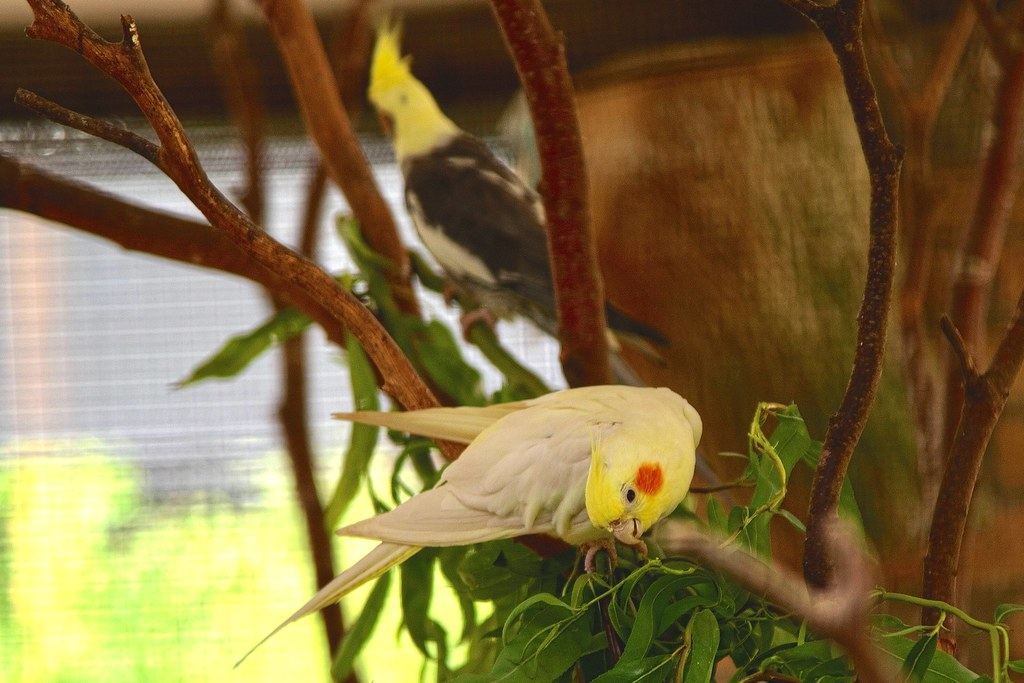
Most birds in American homes are small or medium parrots and songbirds: budgies, cockatiels, lovebirds, canaries, finches and conures. They are bright, social animals who bond closely with their people, and a well-kept one is a genuine companion for years. The one thing new adopters most often misjudge is time: a bird is a daily relationship, not a decoration, and the smaller species need it just as much as the large ones.
Which bird fits your home: small, medium and large
Small birds. Budgies (parakeets), lovebirds, canaries and finches. Budgies are playful, food-motivated and can learn a surprising vocabulary; LafeberVet is clear that they deserve the same care and attention as a larger parrot. Lovebirds are small parrots that are inquisitive and always on the move. Canaries and finches are hands-off birds who sing rather than talk and suit people who want the company of birds without handling. Small birds are quiet enough for an apartment and live roughly 7 to 15 years.
Medium birds. Cockatiels and conures. VCA calls the cockatiel an excellent first bird: vocal but far quieter than the large parrots, cuddly and bold in turn, and happy without other birds if given attention. Conures come in two groups: the smaller Pyrrhura conures such as green-cheeked, pineapple and maroon-bellied, around 55 to 70 grams, and the larger Aratinga conures such as sun, jenday and nanday, around 100 to 200 grams. Both are affectionate and clownish; the Aratinga group is markedly louder. Conures live 20 to 35 years, cockatiels 15 to 25, so a medium bird is a long commitment with manageable daily demands.
Large birds. Amazons, African greys, cockatoos and macaws. Intelligent, long-lived, loud and demanding of hours of daily interaction; Merck describes them as wanting a lot of attention and needing people every day. Wonderful in the right home, and the right home is one with experience, space, and decades to give. Rescues are full of them, and a good rescue will tell you honestly whether you are that home.
“Conures are gregarious, mischievous birds known for their sassiness.”
VCA Animal Hospitals
How smart they are and what that means for you
Parrots are among the most intelligent animals people keep, and that intelligence is the whole point of living with one: they learn routines, words and games, recognize the people they like, and want to be part of what the household is doing. Budgies are gentle and affectionate with large vocabularies for their size. Cockatiels whistle, mimic, and will happily ride a shoulder through the day. Conures are engaging clowns who want to be in the middle of everything. The large parrots are the most capable and the most demanding.
What that means for you is simple: a bird's day needs structure. Best Friends puts the baseline at 2 to 3 hours of out-of-cage interaction every day for any parrot, with things to do for the rest of it, because an under-occupied bird has no other outlet. Hand-reared birds often prefer people to other birds; large parrots kept in pairs usually need separate cages. The ASPCA advises against medium and large parrots unless the owner can meet their full needs, including a bird companion. Match the species to your hours and your tolerance for sound, not to which one talks best.
“Larger parrots, like cockatoos and African gray parrots, want a lot of attention and need to interact with people every day.”
Merck Veterinary Manual
Eating habits and diet
Seed mixes are the most common feeding mistake. LafeberVet states that all-seed diets are deficient in protein, vitamins, and minerals including calcium and vitamin A, and birds pick out the fattiest seeds anyway. Formulated pellets should be the base: 60 to 80 percent of a budgie's intake and 75 to 80 percent for a cockatiel per VCA, with the RSPCA's rule of about three quarters pellets and one quarter fresh food for parrots generally. Offer pellets first thing in the morning when the bird is hungriest. Fresh vegetables and some fruit make up the remaining 20 to 25 percent: broccoli, carrot, peas, kale, sweet potato, peppers, apple without seeds, berries. Remove fresh food after about 2 hours. A budgie's portion of any human food is thumbnail-sized. Seeds and nuts are training treats, not meals; the RSPCA caps a budgie's seed at a tenth of daily food. No grit. Never feed avocado, which damages the heart and can kill; onion, chocolate, caffeine, alcohol, salty snacks, dairy, or anything cooked in butter or oil. Wash food and water dishes daily. Keep the shelter's diet for the first week, then convert a seed-eater gradually with your avian vet's guidance.
“Seeds are highly palatable and preferred by birds, but nutritionally they are incomplete, lacking vitamins, minerals, and protein.”
VCA Animal Hospitals
Health, vet care and lifespan
Lifespan is the first health fact to absorb: budgies 7 to 15 years (LafeberVet), cockatiels 12 to 15 and up to 25, conures 20 to 35 (VCA), and large parrots 30 to 60 years per Merck, with Best Friends citing 60 to 80 for cockatoos and macaws. Birds hide illness because in the wild a sick bird is a target, so by the time a bird looks unwell it has usually been sick for a while. That makes the schedule matter: an avian vet exam within the first week or two of adoption, then yearly at minimum, with many avian vets recommending twice a year. A visit records weight in grams, checks the whole body under a towel, and usually adds blood work and a fecal test; new-bird workups may add X-rays and screening for chlamydiosis and polyomavirus. Species-typical problems: budgies get obesity, fatty tumors, scaly face mites, and chronic egg laying; cockatiels are prone to chlamydiosis, giardia, and night frights. Nails may need trimming; leave wing clipping to a professional, and note the RSPCA advises against it. Household hazards kill: overheated nonstick (PTFE) cookware fumes can kill a small bird within minutes, and open toilets, sinks, and ceiling fans are common causes of death. Any change in appearance or behavior is a same-day call.
“Since pet birds are a prey species, it is common for them to hide symptoms of illness until they are critically ill.”
VCA Animal Hospitals
Taming, handling and noise
Give a new bird a full week in a quiet spot on its familiar diet before any training; it has just lost its flock and its territory. Then work in one or two 5 to 10 minute sessions a day, building to two 20-minute sessions. Start by getting the bird to take food from your hand, using treats such as slivered almond, carrot, or a favorite seed. Teach "step up" by offering a stick as a perch first, then your hand held steady against the lower chest above the legs; the bird may steady itself with its beak, so do not flinch. If it bites, keep fingers together and curled, withdraw only slightly, say a firm "no," then calmly set the bird down and walk away as a time-out. Never hit a bird, never use gloves, and do not react dramatically, which rewards biting. Noise is normal, especially at dawn and dusk when wild flocks call; the fix is to reward quiet with attention and treats and to ignore screaming rather than shouting back or covering the cage. Sudden new screaming can be a health issue. Too much attention creates a bird that cannot entertain itself, so build independent play into every day.
“Never hit your bird, as they do not respond to this type of discipline.”
VCA Animal Hospitals
Housing: cage life, a bird room, or a home aviary
There is more than one good way to house a bird, and the right one depends on the species and on how your household actually runs. The RSPCA's ideal is a bird that spends most of the day out of the cage, and it sets a minimum of one and a half times the wingspan in every dimension for a cage used that way. It also gives the honest alternative: if the bird spends most of its time in the cage, make the cage at least twice the wingspan in height, width and depth. A large, well-placed cage with daily supervised out-time is how most companion birds in busy homes live, and it works when the cage is in the room where the family spends its evenings, has several perches of different diameters and foraging to do, and is nowhere near the kitchen, a window, or a draft.
A bird room is the middle option: a spare room made safe, with the cage door open for hours while you are home, and no ceiling fan, open water or mirrors. An aviary is the option that gives flight without supervision. The RSPCA specifies height, width and depth of at least four times the largest bird's wingspan, another 20 percent per additional bird, an inside area large enough for everyone in bad weather, a third of the outdoor area shaded, secure mesh against wild birds and disease, and a safety porch with double doors. Colony species such as budgies, cockatiels and lovebirds can live in groups in a cage or aviary; large parrots that do not breed in colonies should not share a cage, because they will probably fight.
“If your bird spends most of their time in the cage, make sure the height, width and depth of the cage are at least twice their wingspan.”
RSPCA
Exercise and enrichment, whichever housing you choose
Out-of-cage time is exercise, but so is work: parrots spend their wild day foraging, and giving that back is the single most effective thing you can do for a caged bird. Wrap food in paper, hide it in cardboard tubes, skewer it, and use puzzle feeders. Offer shreddable paper and untreated willow, birch or elm twigs, rotate toys so they stay interesting, and mist-bathe every few days. Rectangular cages beat round ones because birds use corners. Merck's rule for any out-of-cage period is simple: safe and supervised, with windows and doors closed, mirrors covered and the ceiling fan off. Best Friends puts direct interaction at 2 to 3 hours a day for a parrot; when your day cannot give that, company still counts. A cage in the living room, a radio, a window view, and for colony species a companion of its own kind all provide it. Treats stay under 10 percent of calories, and flying skills have to be learned, so a bird new to free flight needs short, low sessions before long ones.
“Birds should be let out of their cages to exercise, but make sure they're safe and supervised during this time.”
Merck Veterinary Manual
What it costs, and why adoption changes the math
Adoption fees at parrot rescues are set by size and published. Parrots First lists budgies at $25 ($40 a pair), cockatiels $40, lovebirds $35, parrotlets $75, conures $150, Amazons $375, African greys $450, and large cockatoos and macaws $550 to $600. Companion Parrots Re-homed charges $30 for budgies, $100 for cockatiels and parrotlets, $200 for conures and quakers, up to $500 for an African grey, and requires two classes, three bonding visits and a home visit before any adoption. Florida Parrot Rescue lists parakeets at $25, cockatiels and lovebirds $100, conures $300, and large cockatoos and macaws $650, and about 98 percent of its birds come with their cage, which it values at $50 to $500. Compare that with retail, where the same conure or cockatiel from a pet store is usually several times the rescue fee and rarely arrives with a cage, vet records or a known temperament.
After the fee, the recurring costs are the same for any parrot: pellets and fresh produce daily, toys that are meant to be destroyed and replaced, and avian veterinary care, which starts with a new-bird exam and continues yearly or twice yearly for the life of the bird. None of the veterinary sources here publish a monthly total for birds, so we do not invent one; budget from those parts and multiply by a lifespan measured in decades.
“adoption fees rarely cover”
Florida Parrot Rescue
The first two weeks at home
Set the cage up before arrival in a quiet room away from the kitchen. Keep the bird on the exact diet the rescue used and leave it largely alone for the first week apart from feeding, talking softly, and short visits; no training yet. Book the avian vet within the first days to two weeks; VCA says newly acquired birds should be examined within the first couple of days, and any existing bird should not be exposed to the newcomer until that exam is done. If you already have a bird, quarantine the new one in a separate room for 30 to 45 days, then move the cages into the same room at a distance and close the gap over days to weeks before any supervised contact; some birds never accept each other. Bird-proof the house now: never run nonstick cookware when the bird is out, keep toilet lids down and sinks and tubs empty, switch off ceiling fans, and remove aerosols and scented sprays from the bird's air. Cockatiels can thrash in panic at night, so keep the room calm and dark and check the bird after any disturbance. Watch droppings and food intake daily; in week two, begin hand-feeding treats.
“All new birds should be checked by your avian veterinarian as soon as they are acquired, before exposing the original bird to a new one.”
VCA Animal Hospitals
Questions to ask the shelter or rescue
Ask what species and how old, and how the age is known. Was the bird captive-bred, and hand-reared or parent-reared? Hand-reared birds may prefer people and not get along with other birds. What does it eat now, seed or pellets, and will it take fresh food? Is it tame: does it step up, does it bite, and how does it react to new people? How loud is it, and when? What is the medical history: has an avian vet examined it, and has it been screened for chlamydiosis or polyomavirus? How many homes has it had, and was it surrendered for screaming, biting, or plucking? Are its wings clipped? Is it bonded to another bird, since large parrots should stay as pairs? Does the cage come with it, and what size is it? Merck's in-person check is simple: a healthy bird is bright and alert, with clear eyes. Finally, ask what happens if the match fails; a rescue that takes birds back is the one to adopt from, because a parrot's needs do not shrink after the first month.
“Make sure the bird was raised in captivity and not taken from the wild.”
Merck Veterinary Manual
Sources
- Merck Veterinary Manual — species comparison, lifespans, health signs
- Merck Veterinary Manual — cage size and shape, placement
- Merck Veterinary Manual — annual exams, hidden illness
- Merck Veterinary Manual — nails, wings, beak
- Merck Veterinary Manual — drowning, fans, fumes
- VCA Animal Hospitals — budgie pellet percentages, grit, portions
- VCA Animal Hospitals — cockatiel diet, pellets first, 2-hour rule
- VCA Animal Hospitals — budgie temperament and vocabulary
- VCA Animal Hospitals — cockatiel lifespan, cage size, temperament
- VCA Animal Hospitals — conure lifespan, noise, cage size
- VCA Animal Hospitals — large parrot temperament
- VCA Animal Hospitals — settling week, step up, sessions, biting
- VCA Animal Hospitals — screaming and biting causes and responses
- VCA Animal Hospitals — new-bird exam timing and tests
- VCA Animal Hospitals — quarantine and introductions
- VCA Animal Hospitals — annual exam contents
- LafeberVet — budgie lifespan, diet, cage, diseases
- LafeberVet — cockatiel lifespan, cage, diseases, night frights
- RSPCA — cage multiples, six hours out
- RSPCA — pellet proportion, seed cap, avocado
- RSPCA — daily flight, foraging, misting
- RSPCA — chewing, plucking, social needs
- RSPCA — pairs, hand-reared birds
- RSPCA — reward-based training
- Best Friends Animal Society — daily hours, lifespans, commitment, diet cost
- Best Friends Animal Society — fees published for dogs and cats only
- ASPCA — position on large parrots
- ASPCA — enrichment ideas, treat cap
- ASPCA — avocado and PTFE
- LafeberVet — small companion bird descriptions
- Parrots First — adoption fee schedule by species
- Companion Parrots Re-homed — adoption fees and adoption requirements
- Florida Parrot Rescue — adoption fees, cages included, vetting costs