Fish, amphibians and hermit crabs: a practical guide for adopters
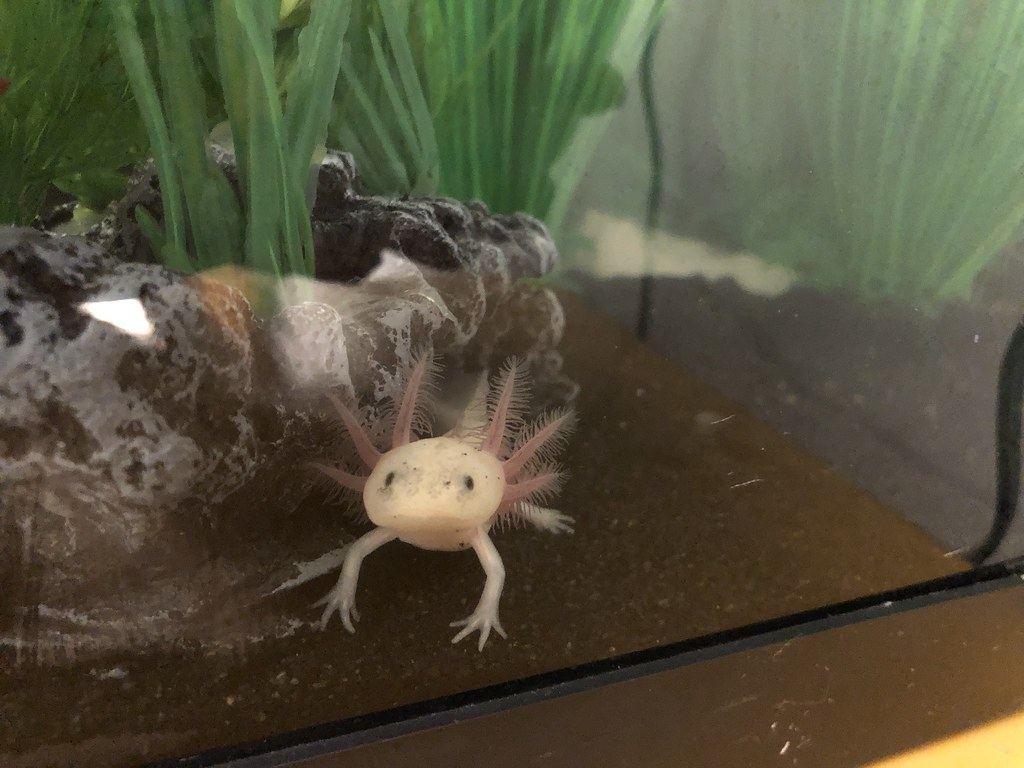
Aquarium fish, axolotls and hermit crabs live inside an environment you build and maintain, and their health is almost entirely a function of water chemistry and humidity you cannot see. The biggest mistake new adopters make is adding animals to a tank that has not been cycled, then treating the resulting ammonia poisoning as if it were a disease.
How smart they are and what that means for you
None of these animals wants to be handled, and stress is the thing you are managing. For fish, the stressors are crowding, bare tanks and sudden change. The RSPCA notes that too many fish in a tank compete for food and become stressed, and that bottom-dwellers such as kuhli loaches and many catfish need caves to feel secure; it also sorts community fish into surface, mid-water and bottom feeders so a tank can be built around compatible groups. Merck warns that a temperature swing of even a few degrees can compromise immunity and gives a maximum change rate of about 1 degree per hour when acclimating. Amphibians breathe partly through skin that absorbs whatever touches it, so Merck says to handle them as little as possible and, when you must, to use powder-free gloves wet with chlorine-free water. Axolotls are sensitive to light and current: VCA specifies dim lighting and a filter outflow buffered to a near-still flow, because strong current damages gills. Land hermit crabs spend much of their time digging and molting underground, and the Smithsonian's National Zoo describes them as social animals that queue up to trade shells in the wild. Enjoy these animals by watching a stable, well-planted system, not by taking them out of it.
“Sudden changes in temperature, of even just a few degrees, can result in compromise of immunity”
Merck Veterinary Manual
Eating habits and diet
Feed by species and remove what is not eaten. Merck's routine for fish is to feed daily and take out leftover food, since uneaten food breaks down into the same ammonia that fish waste does. Different species have different diets and feeding levels, which is another reason to check compatibility before mixing them. Axolotls are carnivores. VCA lists frozen bloodworms, blackworms, pieces of earthworm, frozen brine shrimp, small feeder fish and salmon pellets; young axolotls eat daily and adults every two to three days, or two to three times a week in LafeberVet's guidance. Two of the most common axolotl problems are diet-related: obesity from overfeeding a slow-metabolism animal, and gut obstruction from gulping gravel along with food, which is why the substrate must be something they cannot swallow. Other amphibians mostly need live invertebrates such as earthworms, crickets and fruit flies; because most prey is short on calcium and vitamins, Merck recommends gut-loading insects on a calcium-rich diet for 48 hours or dusting them with calcium and vitamin D3 powder, and checking supplement doses with a vet. For hermit crabs the Smithsonian notes that leaf litter in the enclosure doubles as a snack; ask the rescue what mix of protein and plant foods it has been offering.
“Young axolotls should be offered food daily. Adults do well when fed every 2–3 days.”
VCA Animal Hospitals
Health, vet care and lifespan
Few veterinarians treat fish or amphibians. Merck advises working with a knowledgeable fish veterinarian or experienced keeper to set up a management plan, and the RSPCA says to contact a specialist fish vet for diagnosis; the Association of Reptile and Amphibian Veterinarians' directory covers axolotls. Before blaming disease, test the water. Merck names stress, poor water quality, overcrowding and failure to quarantine as the main causes of fish illness, and the RSPCA says most of the conditions it lists are caused by poor water quality. Signs to know: tiny white spots (ich), white tufts (fungus), ragged fins, bloating with raised scales, sinking or listing, and gasping at the surface. New tank syndrome, ammonia poisoning in the first one to three weeks of a new system, is treated with testing and 50 percent water changes whenever ammonia reaches 2 mg/L. Quarantine new fish for 30 to 60 days. Axolotls live 10 to 15 years, occasionally 20; above 75 F they become sluggish, float and develop bacterial or fungal infections, and water mold is their most common fungal problem. Goldfish can live up to 25 years. The Smithsonian notes land hermit crabs can reach 40 years and coconut size. Amphibian lifespans in general run from months to many years, so ask the rescue about the species.
“Valuable pet fish should be quarantined for at least 30 to 60 days before being added to the general population.”
Merck Veterinary Manual
Cycling the tank and water quality
A filter does nothing until bacteria live in it. Fish excrete ammonia; bacteria turn it into nitrite and then into far less toxic nitrate, and Merck says those colonies take four to six weeks to develop. VCA's rule is to run the filter four to six weeks before adding fish; the RSPCA recommends fishless cycling, testing every other day for at least two weeks, until ammonia and nitrite both read 0 mg/L. Treat tap water: Merck reports harm at chlorine levels as low as 0.02 mg/L. The RSPCA's minimum is about 40 liters, with at least 60 liters per goldfish; VCA suggests a 10 or 20 gallon starter tank at about one gallon per inch of fish. Tropical fish need a heater near 77 F; goldfish do not, at 50 to 70 F. Once established, test every two weeks and change water: 10 percent weekly per the RSPCA, partial changes every two to four weeks per VCA, up to 50 percent weekly for an unfiltered bowl. Adult axolotls need 20 gallons or more, 60 to 64 F and never above 75 F, pH 7.4 to 7.6, zero ammonia and nitrite, nitrate under 10 ppm, and gentle outflow. Hermit crabs need high humidity, at least 6 inches of substrate to burrow in, and fresh and salt water pools.
“Kits for ammonia and nitrite are essential – not optional extras.”
RSPCA
Handling, enrichment and daily routine
Daily: feed, remove uneaten food, glance at every animal for the signs listed above, and read the thermometer. Every two weeks: test pH, alkalinity, ammonia, nitrite and nitrate (and salinity in marine tanks), as Merck recommends. Weekly or on your chosen schedule: siphon out a portion of the water and replace it with conditioned water at the same temperature, and clean the filter as VCA advises without stripping its bacteria. Amphibian enclosures need weekly water testing too, a humidity gauge in every tank, and gloves during cleaning to prevent spreading disease. Do not net or lift fish unless you must, and do not lift axolotls at all except in an emergency with wet powderless gloves. Enrichment for fish is habitat: sand or gravel, real plants for shade, sturdy rocks and branches, and caves for bottom-dwellers. Axolotls need hides and dim light. Hermit crabs need deep, diggable substrate, a supply of empty shells larger than the ones they wear, and both freshwater and saltwater pools they can wade in, as the Smithsonian's exhibit provides. A crab that has disappeared underground is probably molting; that is what the substrate is for. Keep a written log of test results so you can see a problem trend before the animals show it.
“they should be handled as little as possible because their skin is delicate”
Merck Veterinary Manual
What it costs
Adoption fees for fish, axolotls and hermit crabs are usually small and vary by organization; the ASPCA notes that fees exist to cover the animal's care and are sometimes waived in promotions. The cost is the system, not the animal. Expect to buy a tank of at least 40 liters (10 gallons) and preferably 20, a filter, a heater for tropical species, a thermometer, a water conditioner, and test kits for ammonia and nitrite, which the RSPCA calls essential rather than optional. Axolotls need the same equipment minus the heater, plus a way to keep water under 75 F in a warm home, and a 20-gallon-plus tank. Hermit crabs need a humid enclosure, 6 or more inches of substrate, two water dishes and spare shells. Recurring costs are food, water conditioner, test reagents, replacement filter media, electricity for heating and lighting, and the occasional visit to a specialist fish or exotic vet. None of the trusted sources we consulted publishes a U.S. dollar estimate for setup or annual upkeep, so we will not invent one; the RSPCA's summary is that keeping fish takes a great deal of preparation, investment, time and care. Ask the rescue what equipment the animal is living in now and price a matching setup before you apply.
“Fish aren't simple creatures to look after”
RSPCA
The first two weeks at home
The first two weeks start before the animal does. Have the tank cycled and tested at zero ammonia and zero nitrite, with the temperature matched to what the rescue keeps; the RSPCA's minimum is two weeks of running with fishless cycling, and VCA's is four to six. Acclimate slowly on arrival, no faster than about a degree an hour. If you already have fish, keep the newcomers in a separate quarantine tank for 30 to 60 days. Test the water every day or two for the first three weeks, because Merck places new tank syndrome in that window; if ammonia reaches 2 mg/L, change half the water immediately and keep changing until it falls. Feed lightly, once a day for fish, daily for young axolotls and every two to three days for adults, and remove leftovers. Watch for gasping at the surface, clamped or ragged fins, white spots or tufts, and for axolotls, floating or curled gills. Give hermit crabs deep substrate and both water pools on day one and expect them to disappear to dig. If anything looks wrong, check the water first, then call a specialist fish or exotic vet.
“This syndrome usually occurs within the 1 to 3 weeks after a new system is set up.”
Merck Veterinary Manual
Questions to ask the shelter or rescue
Ask the exact species and adult size, and for fish, which other species they have lived with without trouble. Ask for the current water parameters: temperature, pH, and whether the tank runs a heater, so you can match them. Ask how long the rescue's tank has been running and how often water is changed. Ask what the animal eats, how often, and whether it has been treated for ich, fungus or parasites. Ask about visible health: Merck's checklist is smooth, unblemished scales, intact fins and bright, clear eyes, with normal swimming rather than circling or drifting. For axolotls, ask what temperature they have been kept at and whether the tank has gravel. For hermit crabs, ask how many are in the group, how deep the substrate is, and whether spare shells come with them. Ask what the fee covers and whether the organization will take the animal back. Finally, ask the rescue to look over your planned setup; the RSPCA advises adding fish only to a tank set up for that specific type and running for at least two weeks, and a good rescue would rather delay an adoption than send an animal into an uncycled tank.
“Healthy fish generally have smooth, unblemished scales, fins, and skin surfaces.”
Merck Veterinary Manual
Sources
- Merck Veterinary Manual — nitrogen cycle timing, stocking, heater, dechlorination
- Merck Veterinary Manual — quarantine duration, testing schedule, signs of illness, fish vets
- Merck Veterinary Manual — new tank syndrome, ich, causes of illness
- Merck Veterinary Manual — signs of a healthy fish
- Merck Veterinary Manual — tropical temperature, species differences
- Merck Veterinary Manual — ammonia, chlorine and temperature-change thresholds
- Merck Veterinary Manual — amphibian skin, handling, lifespans
- Merck Veterinary Manual — amphibian water testing, humidity gauge, gloves
- Merck Veterinary Manual — live food, gut-loading, dusting
- VCA Animal Hospitals — starter tank size, cycling period, water changes, conditioner
- VCA Animal Hospitals — axolotl lifespan, temperature limit, diet, lighting, flow
- LafeberVet — axolotl tank size, water parameters, handling, diseases
- RSPCA — minimum tank size, fishless cycling, test kits, water changes, temperatures
- RSPCA — goldfish lifespan, commitment, two-week minimum before adding fish
- RSPCA — signs of disease and checking water first
- RSPCA — crowding stress, hides, feeding groups
- Association of Reptile and Amphibian Veterinarians — finding an amphibian veterinarian
- Smithsonian's National Zoo and Conservation Biology Institute — hermit crab substrate depth, humidity, water pools, shells, lifespan
- ASPCA — adoption fees
- Best Friends Animal Society — return policy